
Search Georgia Public Records
Georgia public records are open to everyone. You can search government documents from any agency in the state. The Georgia Open Records Act gives you the right to inspect and copy records. You do not need to live in Georgia. You do not need to say why you want the records. State agencies, counties, and cities must respond within three business days.
Georgia Public Records Quick Facts
What Are Georgia Public Records
Public records in Georgia include many types of documents. O.C.G.A. § 50-18-70 defines what counts as a public record. The law covers documents, papers, maps, books, tapes, and photos. It also includes computer files and data fields. Any record prepared by a government agency is public. Records held by private firms doing work for agencies are also public.
Agencies must let you see these records. They must also give you copies. You can ask to inspect records in person. You can also ask for copies by mail or email. The law says agencies cannot make you explain why you want the records. This is true for most requests in Georgia.
Not every record is public. The law lists fifty types of exempt records. These include medical files, police investigation records, and some personal data. Social security numbers and bank account numbers are protected. Trade secrets and attorney-client talks are also exempt. Agencies must tell you if they withhold records. They must cite the specific law that allows the exemption.
How to Request Public Records in Georgia
You can make a request in many ways. Oral requests are allowed but written requests work better. A written request creates a record of what you asked for. Many agencies now use online portals. These portals let you submit requests and track them. You can also send requests by email or regular mail.
The Governor's Office Open Records Portal shows how state agencies handle requests. Evan Frey serves as the Open Records Officer. The office is at 201 State Capitol, Atlanta, Georgia 30334. Office hours are Monday through Friday, 8 AM to 5 PM. The portal includes a web form for submitting requests. You get a response within three business days.
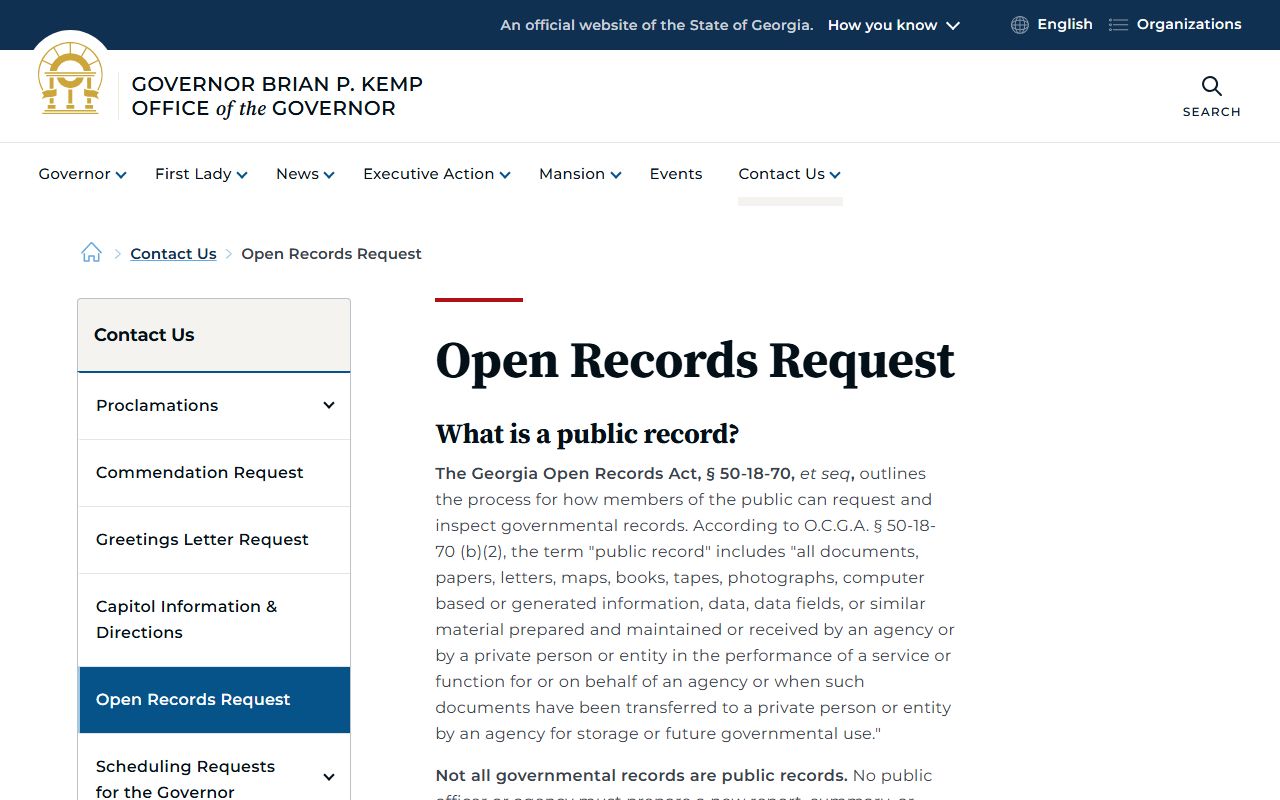
Note: The Governor's Office portal handles only state executive branch records.
County and city records work the same way. Each local government has an Open Records Officer. You can find them on the government website. Some use third-party portals like GovQA or JustFOIA. These systems make it easy to file and track requests. You can also call the office directly to ask about their process.
Fees for Georgia Public Records
Agencies can charge for search and copy work. O.C.G.A. § 50-18-71 sets the fee rules. The first fifteen minutes of search time are free. After that, you pay the hourly rate of the lowest-paid worker who can do the search. This keeps costs fair for requesters.
Paper copies cost ten cents per page. This rate applies across Georgia. Electronic records cost only the price of the media used. Agencies cannot charge extra for putting records on a CD or USB drive. If your request will cost more than five hundred dollars, the agency can ask for prepayment. They must give you an estimate first. You can narrow your request to lower the cost.
Georgia Public Records Databases
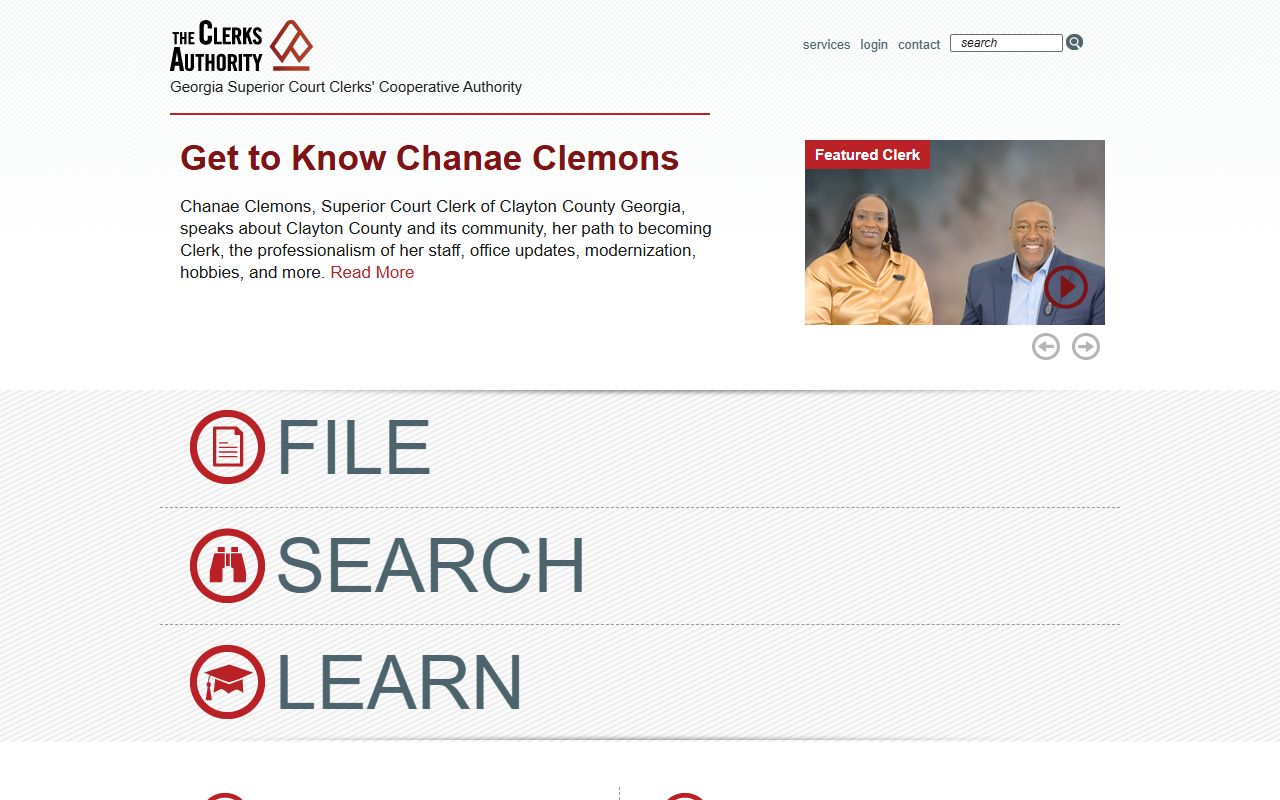
Many Georgia records are online. You do not need to file a formal request for these. The Georgia Superior Court Clerks' Cooperative Authority runs several key databases. You can search real estate records across the state. You can look up UCC filings and notary public records. The GSCCCA also tracks civil case filings. Monthly subscriptions start at $14.95.
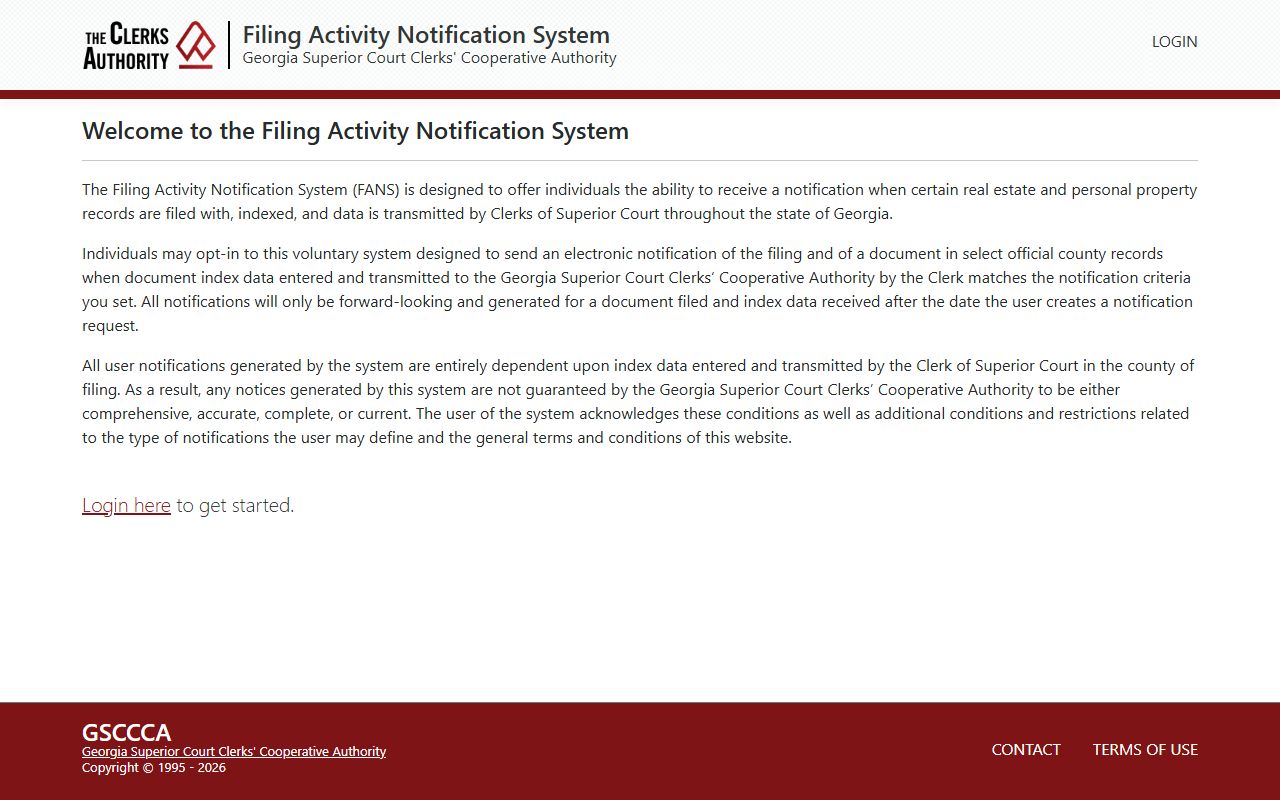
The GSCCCA also runs the FANS system. FANS stands for Filing Activity Notification System. It is free to use. You can register your property and get alerts about new filings. This helps prevent fraud. You will know if someone files a lien or deed on your property.
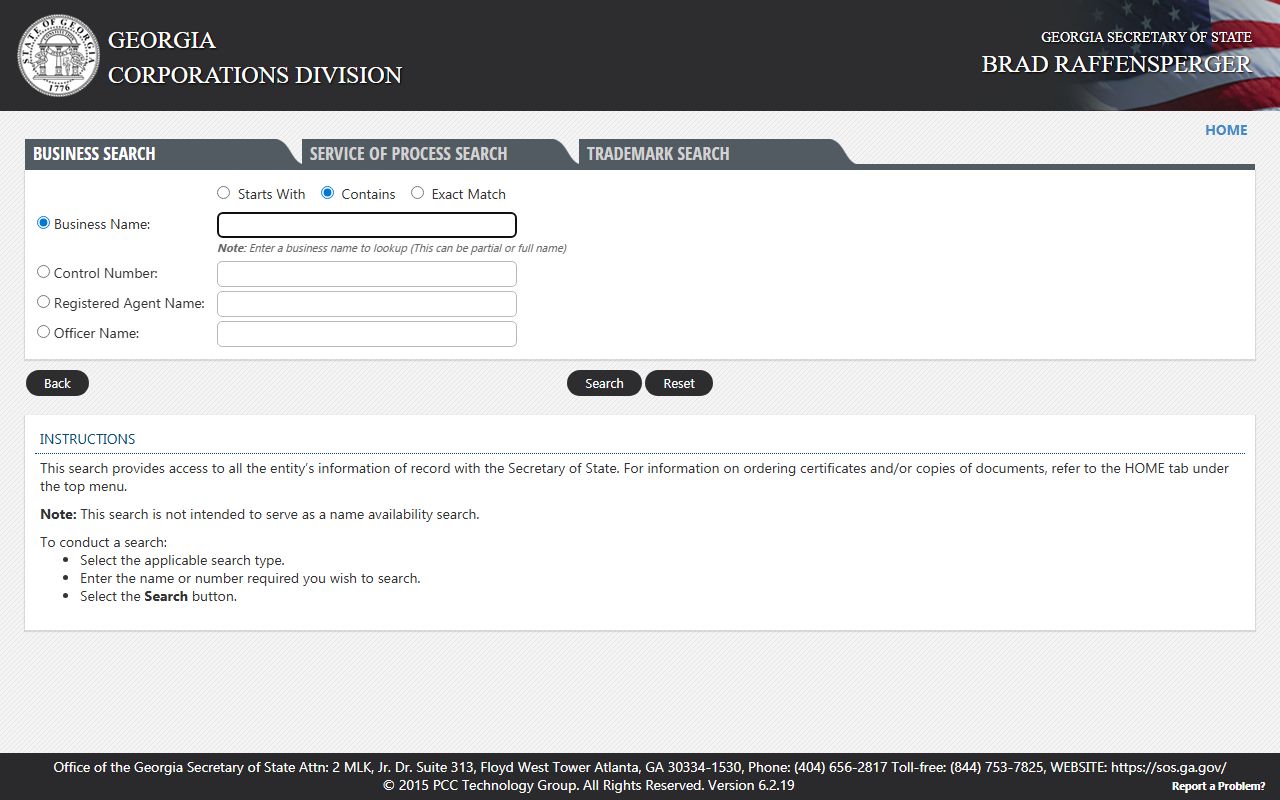
The Secretary of State has business records online. You can search business entities by name or control number. You can also search professional licenses. These databases are free to use. They help you verify businesses and check license status in Georgia.
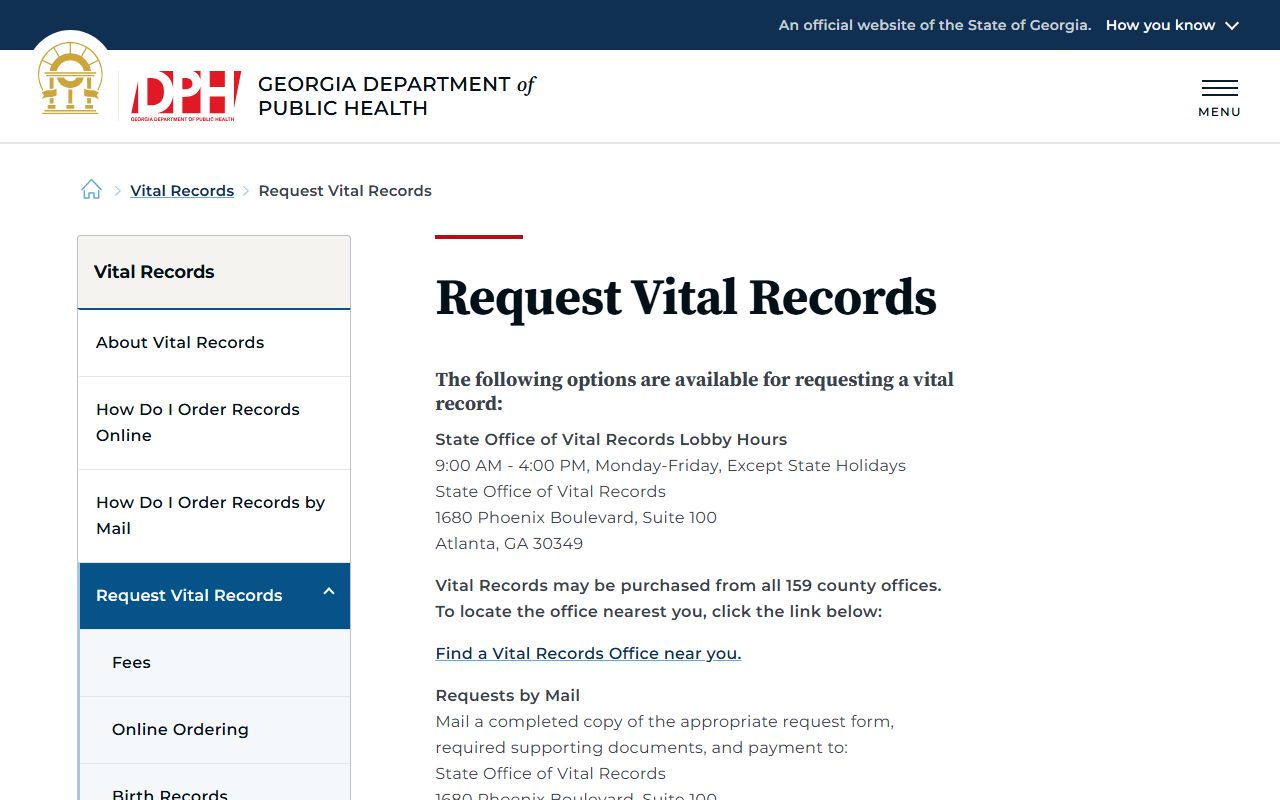
Vital records are also available. The Department of Public Health handles birth and death certificates. They also have marriage and divorce verifications. You can order these online, by mail, or in person. Certified copies cost $25. Additional copies ordered at the same time cost $5 each.
Georgia Public Records Response Times
Agencies must respond quickly to requests. The standard time is three business days. This rule applies to most records. The clock starts when the agency gets your request. They must either produce the records or tell you when they will be ready. If they need more time, they must explain why.
Some records take longer. University athletic records have a ninety business day response time. This longer period applies only to sports-related requests at public colleges. All other records use the three-day rule. Agencies cannot use delays to avoid releasing records.
If an agency denies your request, they must cite the law. They must point to the specific exemption in O.C.G.A. § 50-18-72. They cannot simply say no. You have the right to appeal. You can file a civil action to force disclosure. The court can order the agency to release the records.
Penalties exist for agencies that break the law. O.C.G.A. § 50-18-74 makes willful violations a crime. The first offense can bring a fine up to $1,000. Additional violations within twelve months can cost up to $2,500 each. These penalties help ensure agencies take the law seriously.
Who Can Request Georgia Public Records
Anyone can request public records in Georgia. You do not need to be a state resident. You do not need to be a United States citizen. Corporations and other entities can also make requests. The law is broad. It aims to give everyone access to government information.
You rarely need to explain your purpose. The law says you can inspect records without giving a reason. This is a key part of open government. There are a few narrow exceptions. Some law enforcement records require a valid purpose. But most requests need no explanation.
Agencies cannot ask who you are. They can ask for contact info to send the records. But they cannot demand ID for most requests. This protects your privacy. It also prevents agencies from blocking requests they do not like.
Help With Georgia Public Records
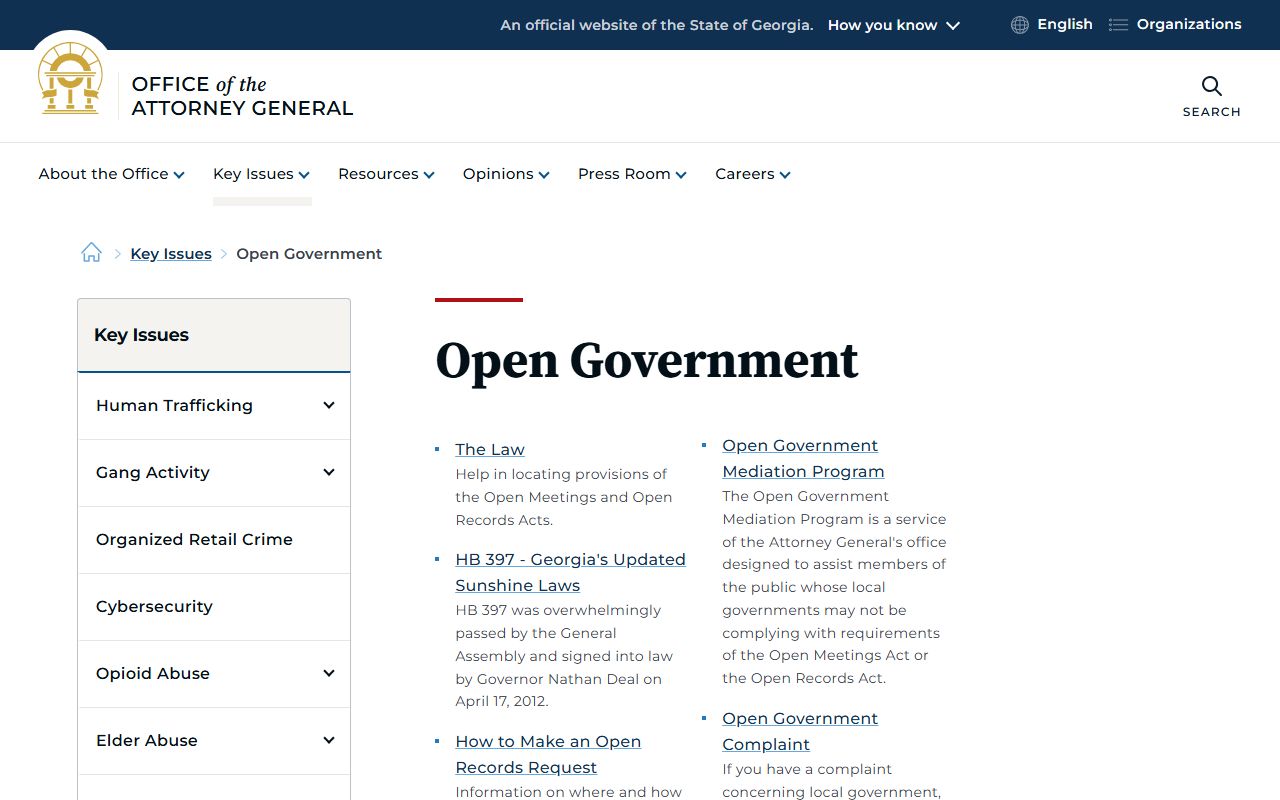
Several groups can help you with records requests. The Georgia Attorney General's Office has guides on how to make requests. They offer sample request forms. They also answer common questions. Their website is a good starting point.
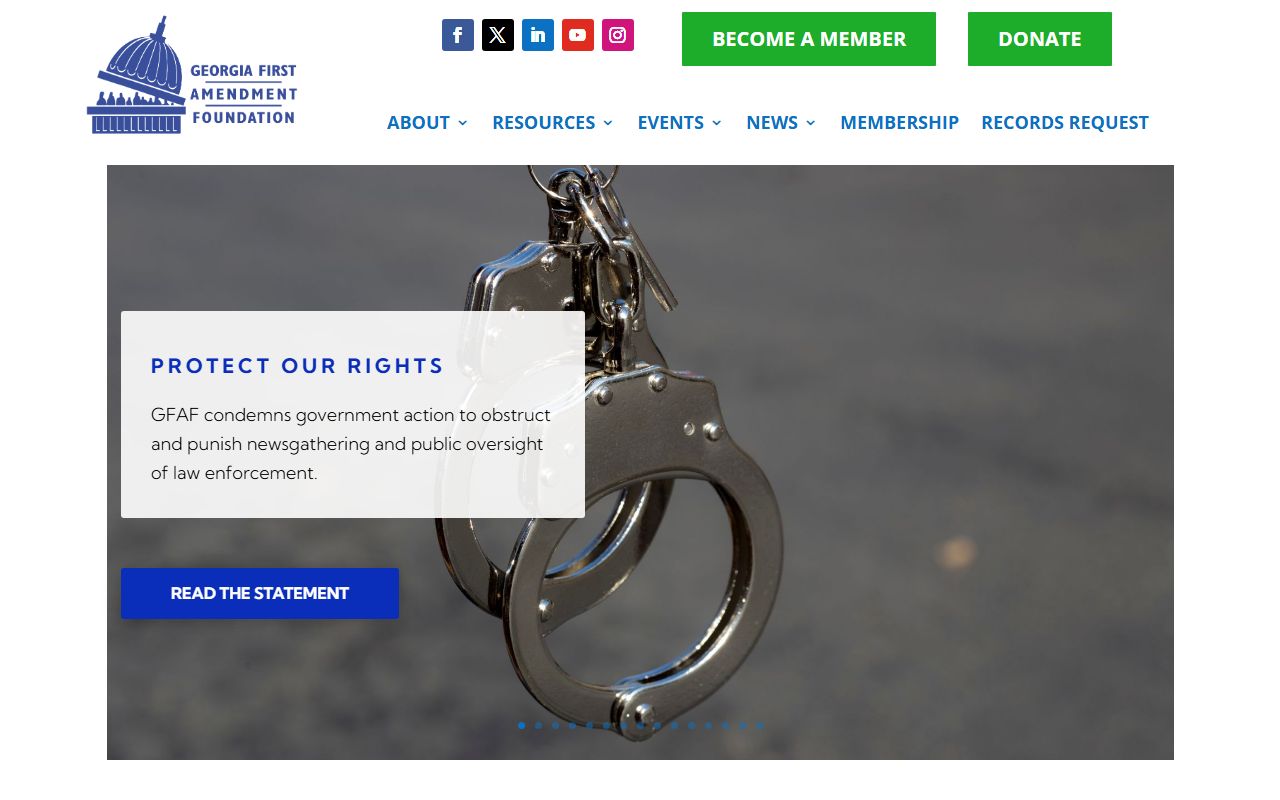
The Georgia First Amendment Foundation also helps. They publish an Open Government Guide. They offer training on records access. Their work supports journalists and citizens alike. They track changes to the law.
If you face a denial, you may need a lawyer. Legal aid groups can help in some cases. The State Bar of Georgia has a lawyer referral service. They can connect you with an attorney who knows open records law. Some lawyers work on these cases at reduced rates.
Browse Georgia Public Records by County
Each of Georgia's 159 counties maintains its own records. Select a county below to find local contact information and resources for accessing public records in that area.
Public Records in Major Georgia Cities
Georgia's cities also maintain public records. Select a city below to learn about accessing records in that municipality.